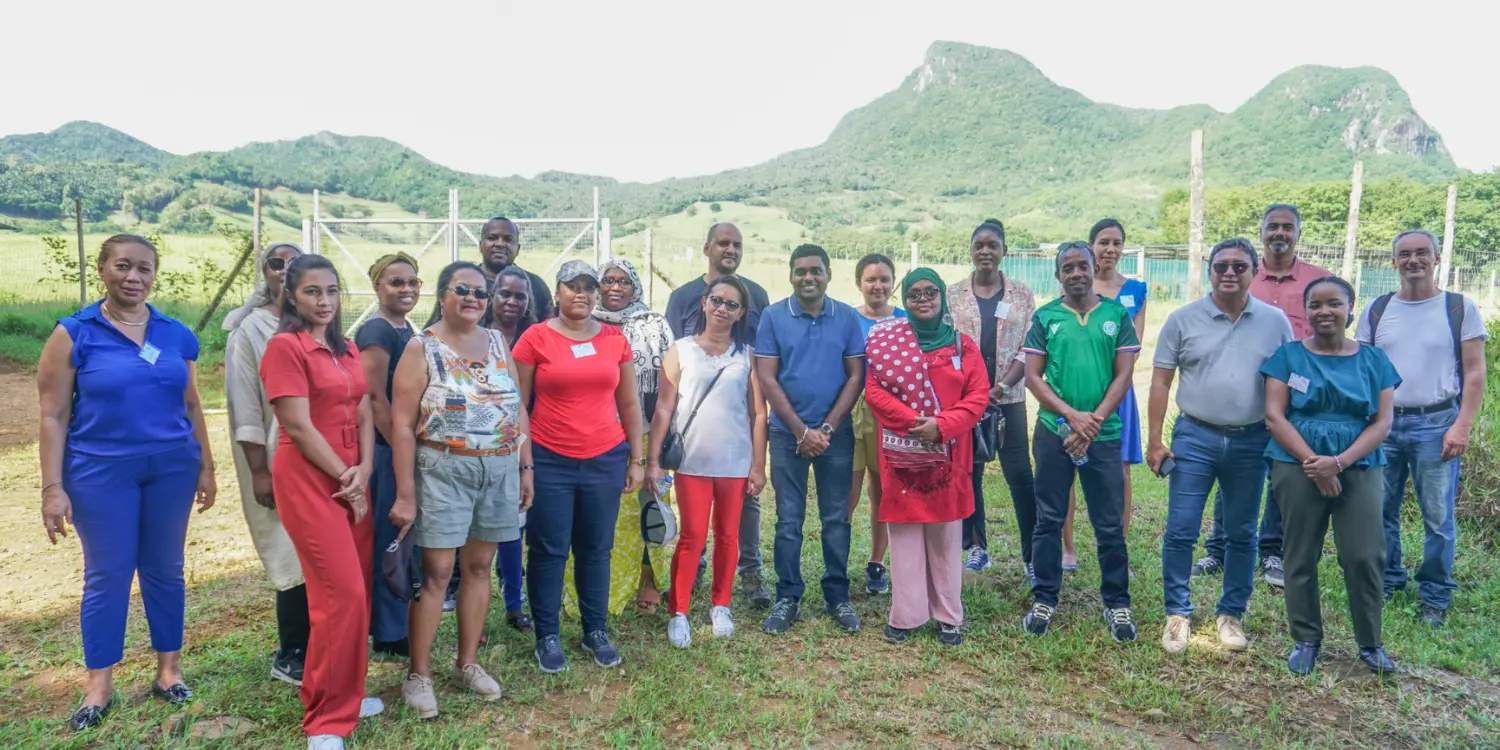
Meeting in Mauritius from 20 to 24 March, the technical focal points appointed by the member organizations of Cap Business Océan Indien took part in a week of onboarding and training. This fundamental activity makes it possible to move from the strategic 2021-2026 Roadmap to an operational version.
Described as a trigger, this activity laid the foundations for the co-creation and implementation of the association’s sectoral action plans, drawing on its members through the contribution of the technical focal points.
During the week, the technical focal points and the Cap Business OI team had the opportunity to get to know each other better and to lay solid foundations for improving collaborative work within the region’s private sector. It was also an opportunity to understand the economic reality of the different territories, thanks to presentations by the focal points on how each territory’s economic ecosystem has evolved over recent decades. Group discussions made it possible to identify actions to be taken to mobilize private operators in our islands in order to achieve fairer, more sustainable and more resilient development.
These thematic discussions were punctuated by company visits. With blue biotechnology identified as a high-potential sector for the region, the focal points visited Axonova, where among other things they discovered the pharmaceutical, nutraceutical and biomedical potential of Mauritian flora, and Algoris, where the manufacturing cycle of spirulina-based products was presented to them. Not to mention a visit to one of the country’s emblematic factories, Omnicane, a company that has specialized in the optimal processing of sugarcane into a range of products since 1926.
The week also featured awareness-raising activities, including the discovery of an innovative digital tool developed by the NGO Reef Conservation for monitoring mangroves, and an introduction to good practices for restoring native forest in urban areas during a field visit in the capital.
The highlight of the week was the holding of the first regional technical committee covering the association’s priority sectors and cross-cutting markers. This step is fundamental to the design and implementation of a structured regional dialogue platform. It will make it possible to monitor the changing needs of the various sectors and to reflect together on solutions. The creation of this regional technical committee is the result of a collective ambition to align ideas and build a common advocacy for the regional private sector.