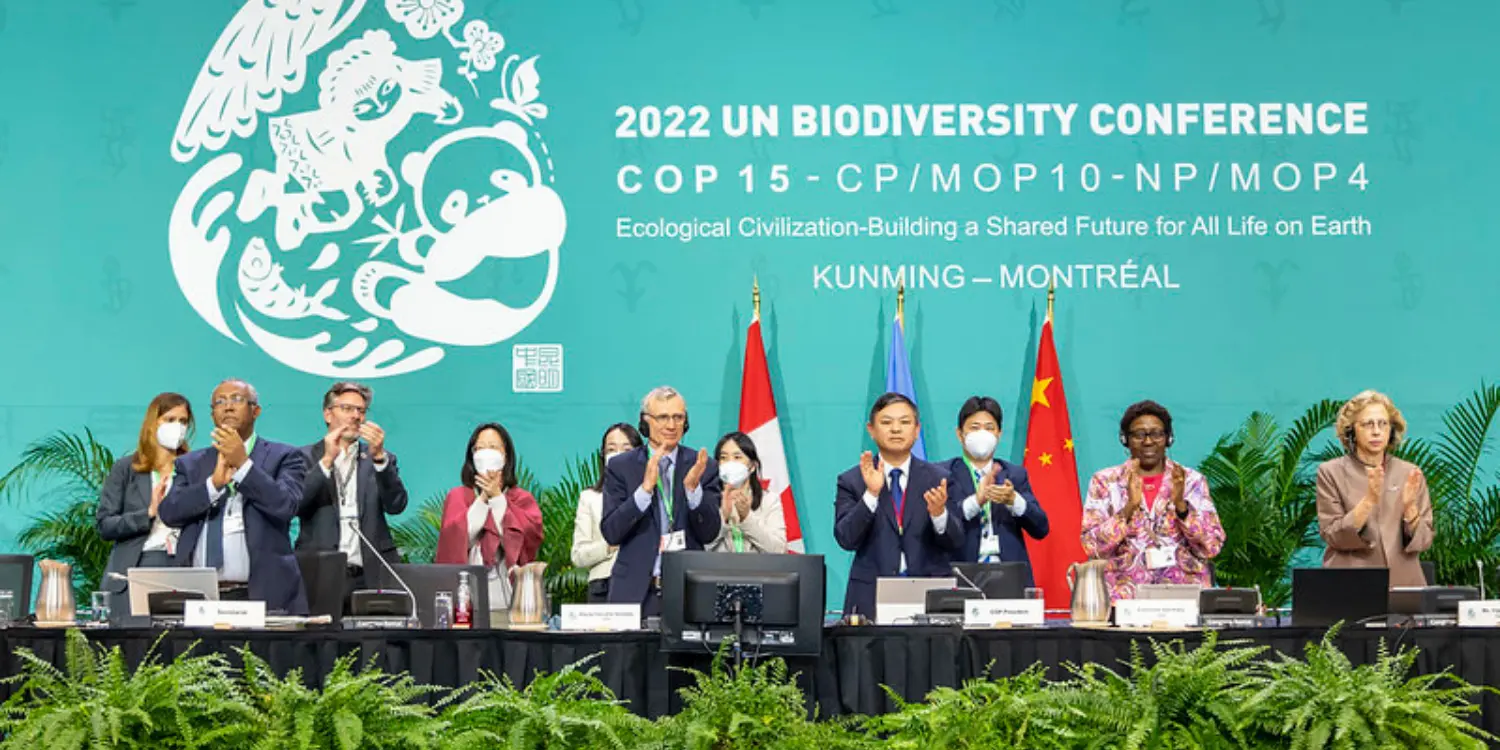
The United Nations Biodiversity Conference (COP15) concluded in Montreal, Canada, on 19 December 2022 with a historic agreement to guide global action for nature through to 2030. Representatives of 188 governments met for two weeks for this important summit.
COP15, chaired by China and hosted by Canada, resulted in the adoption of the Kunming-Montreal Global Biodiversity Framework (GBF). This framework includes concrete measures to halt and reverse nature loss, including the protection of 30% of the planet and 30% of degraded ecosystems by 2030. It also proposes solutions to increase financing for developing countries, which was a major point of contention during the negotiations.
The Global Biodiversity Framework has four overarching goals to protect biodiversity:
- Halt human-induced extinction of threatened species and reduce the extinction rate of all species tenfold by 2050;
- Use biodiversity sustainably;
- Share fairly the benefits arising from the use of genetic resources, and ensure that adequate means of implementing the framework are accessible to all Parties, in particular Least Developed Countries and Small Island Developing States.
Implementation of the Global Biodiversity Framework is now the key to achieving the global goals for nature protection, according to the Executive Director of the United Nations Environment Programme (UNEP)
, Ms. Inger Andersen.
The Global Biodiversity Framework includes 23 targets to be achieved by 2030, including halving global food waste and mobilizing 200 billion dollars per year for biodiversity financing.
Financing played a key role at COP15, with discussions focusing mainly on the amount of funding that developed countries will send to developing countries to tackle biodiversity loss. The Global Environment Facility was asked to establish a special trust fund, the Global Biodiversity Framework Fund, to support its implementation and ensure an adequate, predictable and timely flow of funds. Participating countries also approved a series of related agreements for the implementation of this framework.
The rapid and consistent implementation of these targets is essential to avoid a further acceleration of the global rate of species extinction, which is already at least tens to hundreds of times higher than the average over the last 10 million years. Efforts from private operators are more than expected: Cap Business Océan Indien invites all businesses in the region wishing to take action to contact our Biodiversity Project Officer.