
The private sector and the research community come together for biodiversity around a common goal: “Achieving a Nature-Positive Future”. Discover the highlights of this dialogue and practical resources to use in your biodiversity project.
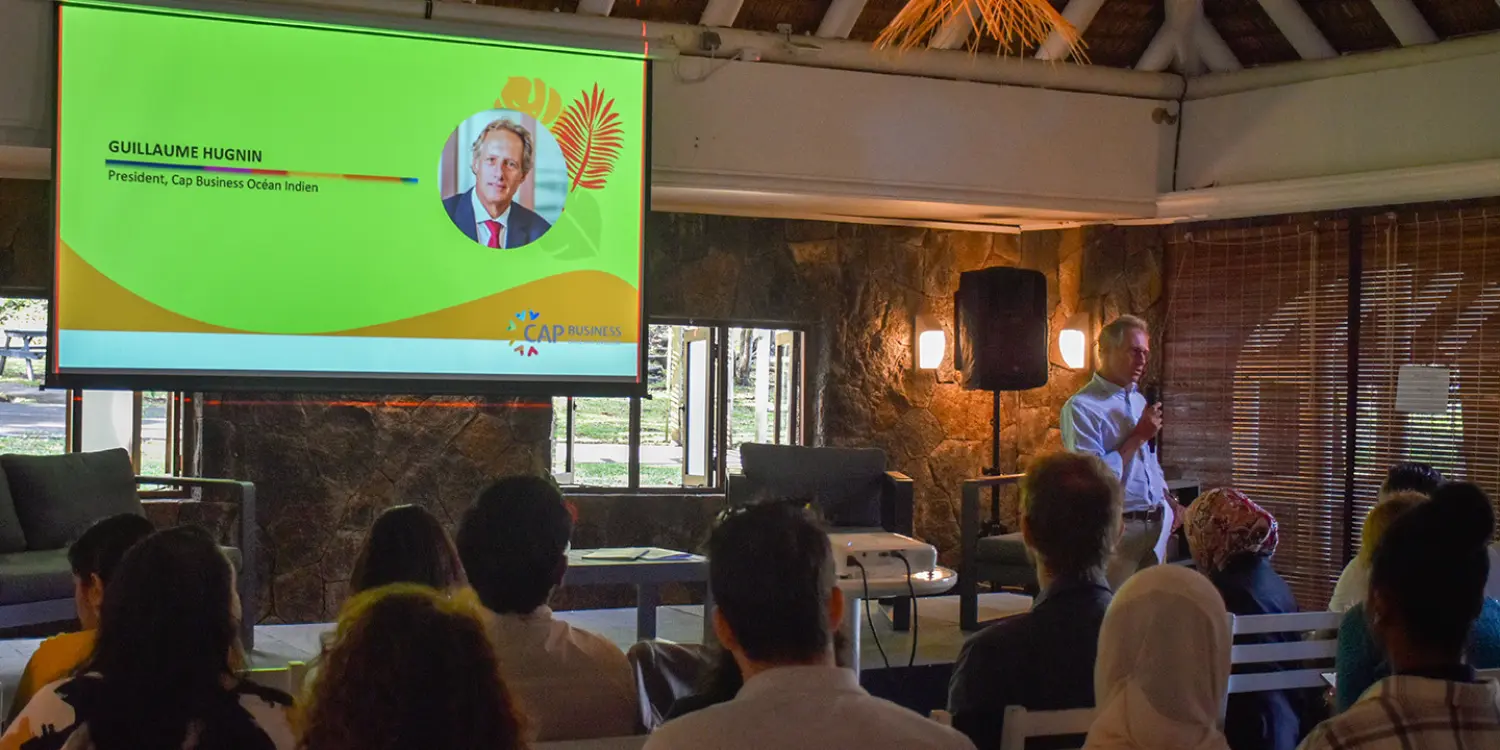
Organised in partnership with Cap Business Océan Indien on 28 June 2024, the workshop entitled “Biodiversity workshop: Good Practices in the Private Sector” helped move forward the discussion on biodiversity conservation. As part of its Business For Biodiversity (B4B) project under the Varuna Biodiversity programme, Cap Business Océan Indien seeks to strengthen dialogue between public and private stakeholders in the region on biodiversity issues. Through its network, Cap Business Océan Indien brought this regional dimension and provided technical expertise during the interactive sessions through its Biodiversity Project Officer, Dr. Pricila Iranah.
Initiated and co-organised by Casela Nature Parks, a Mauritian leisure and attractions centre known for its nature reserve and its endemic and exotic wildlife, the event brought together the Mauritian private sector, researchers, biodiversity experts and associations working in Mauritius to move towards higher-impact projects through UN SDG 17: Partnerships for the Goals.
This type of dialogue platform is more essential than ever. Particularly in a widespread context of biodiversity loss with declining populations, where the survival of species is threatened and connectivity between habitats and landscapes is diminishing. The World Wildlife Fund’s Living Wildlife Report is clear: “We must achieve [the goal of] nature-positive by 2030”. This means increasing natural capital so that we end this decade with more nature than when we entered it.
Productive discussions between researchers and businesses
The interactive workshops, held as group discussions, addressed three themes: Communication & Collaboration, Planning a Project, and Ensuring a Project’s Success. These themes cover the essential foundations of any biodiversity project. With engagement and evaluation as the key issues, discover the outcome of this dialogue and practical guides to address the challenges identified.
Participants unanimously highlighted the importance of investing in raising awareness and educating citizens to encourage their engagement in any project. They also recognised the strong potential of stakeholders who, once made aware, can take part in the project as collaborators… While acknowledging the need for capacity building to generate engagement and collaboration on the part of change-makers (private sector or other).
Tools to integrate engagement into your strategy:
This part brought out practical concepts for planning a project to conserve living things. Participants recognised that mastering one’s subject is the key to planning a project. This means knowing a site through the available data, taking into account the unknowns and the most relevant issues… While ensuring the source, quality and correct interpretation of this data.
This data must then be put into the context of global issues, and the terminology must be mastered, as it has the power to link the project to a specific source of funding. Being able to distinguish categories such as ecosystem adaptation, nature-based solutions and the causes of biodiversity loss (among many others) is therefore a decisive factor in a project’s success.
Involving stakeholders from this stage is very important, particularly because elders in some local communities are sometimes able to share informal knowledge about a site, its ecosystems and the culture attached to them. The logistical and administrative aspect is just as important, especially if permit requirements are anticipated when drawing up task schedules.
In connection with the importance of planning, participants also stressed the importance of developing evaluation and monitoring methodologies from the project design stage. These can then be adjusted during implementation. Similarly, identifying the project’s impact and benefits for local communities and the environment in advance provides precise standards to evaluate and monitor, as markers of success or, conversely, of the need for improvement.
Tools to plan your project:
During this workshop, the exchanges led to a consensus between researchers, private companies and associations. In particular:
Strength lies in unity… Especially when communication is part of it! It is on the basis of these perspectives, as varied as they are essential, that lasting solutions to protect living things take shape.

Lorem ipsum dolor sit amet, consectetur adipiscing elit. Ut elit tellus, luctus nec ullamcorper mattis, pulvinar dapibus leo.