The six islands of the south-western Indian Ocean form part of one of the world’s 34 biodiversity hotspots. This exceptional natural wealth is under increasing pressure from climate change, pollution, overexploitation of natural resources and other threats. Addressing its degradation is critical, as several key economic sectors, including tourism, the blue economy and agriculture depend directly on the ecosystem services it provides.
Businesses across the region are on the front line of these challenges and are increasingly aware of their dependence on natural capital. However, few have the tools and expertise needed to effectively integrate biodiversity considerations into their strategies. They can also struggle to navigate the complexity of the tools available to measure and reduce their impact on biodiversity. Professional organisations and Chambers of Commerce in the region play an important role in supporting businesses, but do not always have access to the information and data needed to effectively assist the companies within their networks.
Cap Business Océan Indien aims to address this gap through the Business for Biodiversity (B4B) project, one of eight projects under the Varuna programme, funded by Agence Française de Développement (AFD) and implemented by Expertise France.
The Business for Biodiversity (B4B) project aims to raise awareness across the region’s private sector of the drivers and risks associated with biodiversity loss. It supports businesses by providing them with the tools to measure their impacts and integrate natural capital considerations into their strategies.
The project includes a one-year coaching programme for 12 businesses operating in the agriculture and tourism sectors across the region. The programme includes training for sustainability managers on biodiversity issues and natural capital accounting, providing businesses with practical support to advance their ecological transition and embed biodiversity into their decision-making and strategies.
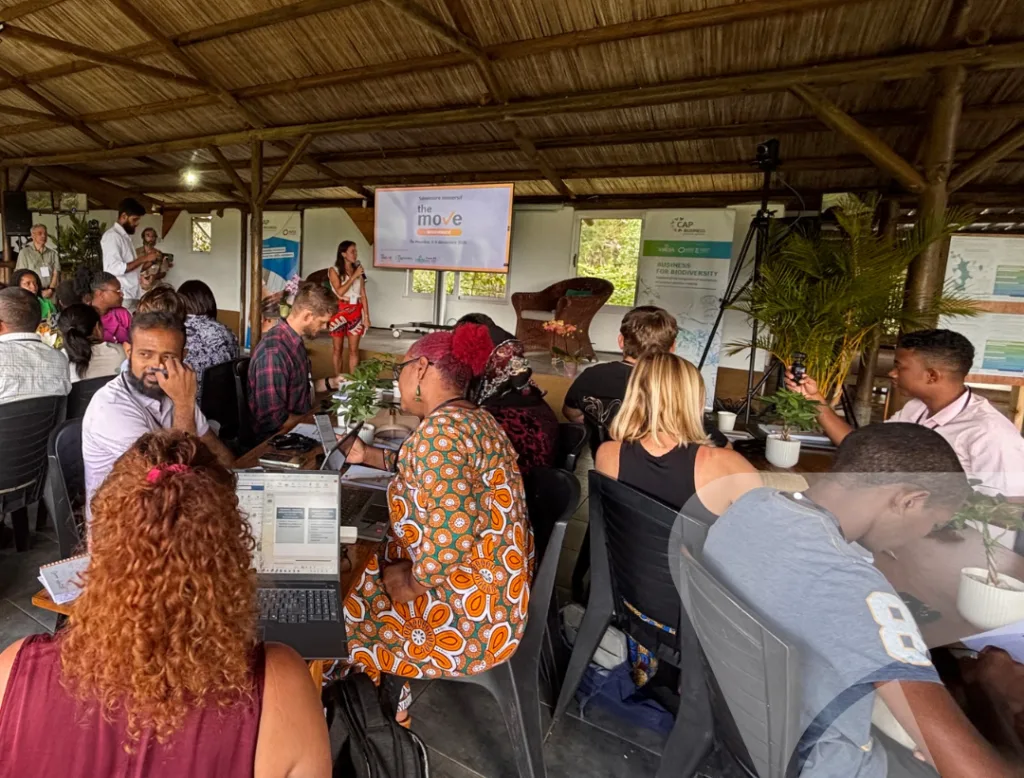
Alongside this, dialogue platforms are being established to foster collaboration among stakeholders. These include a series of five conferences and panel discussions, sessions held as part of Cap Business Océan Indien’s Regional Working Group on Biodiversity, and a four-day residential regional seminar in Mauritius.
A sector-level study is also being conducted to better understand how key economic sectors, particularly tourism and agriculture, interact with ecosystems. At the business level, the project will also carry out double materiality assessments, examining both the impacts on and dependencies of the 12 beneficiary businesses on biodiversity.
Together, these initiatives aim to build a network of “model businesses” that can lead the way in integrating biodiversity considerations into business strategy and decision-making.